The “Frankenstein” Tech Stack: Why Your D2D Sales Reps Hate Your Apps in 2026

You read the breakdowns of the top door-to-door sales apps. You swiped your company credit card. You set up the accounts and ran the mandatory Monday morning training session.
But out in the field, reality hits different.
Right now, the biggest threat to your field sales conversion rate isn't your closest competitor or the economy. It’s App Fatigue.
When you force a rep to check a routing app to find their street, log data in a clunky mobile CRM, text their manager an update, and check a completely separate website just to see the team leaderboard, their brain simply rejects it. We call this the "Frankenstein" tech stack—a stitched-together monster of disconnected software that slows reps down and drains their emotional battery before they even knock on the first door.
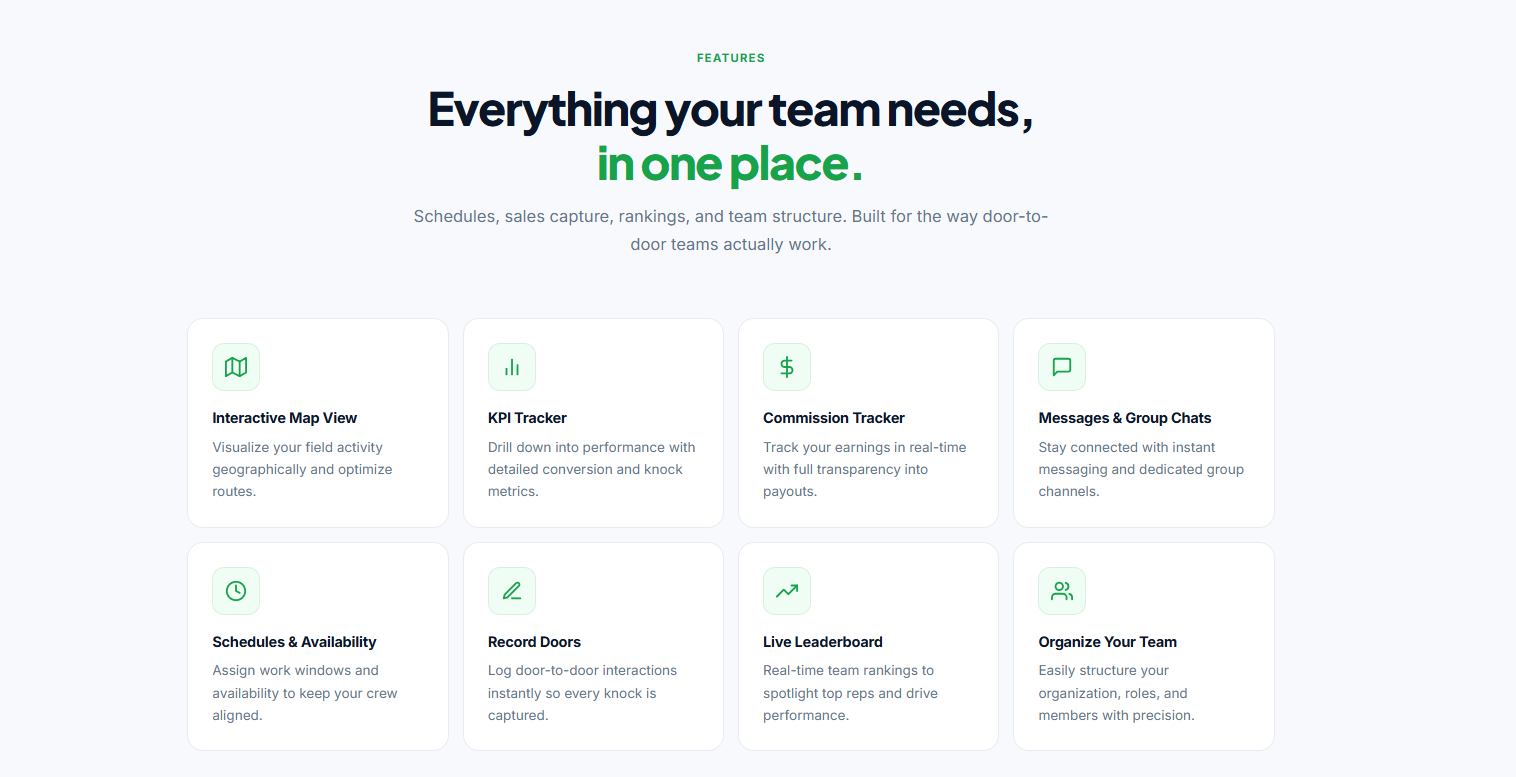
If your software isn't actively making it easier to knock on the next door, your reps will abandon it. Here are the core features modern, high-converting D2D teams demand to consolidate their tech and keep their reps hyper-focused.
1. The "3-Second Rule" Interface
Out on the sidewalk, time is literally money. If it takes a rep more than three seconds to log a doorstep interaction, they simply won’t do it accurately.
- The Old Way: Drop a pin, wait for the cloud to sync, open a new drop-down menu, type out "Not home, come back tomorrow at 5 PM," hit save, and exit to the map.
- The 2026 Standard: One-tap visual logging. Swipe right for a pitch, swipe left for a rejection, tap once to set an automatic callback reminder. The best platforms act like a rapid-fire visual workspace, not a corporate data-entry spreadsheet.
2. Local-First Architecture (The "Zero-Lag" Offline Mode)
Every field manager knows the excruciating pain of suburban cellular dead zones. When a rep loses service, traditional cloud-based web apps freeze, crash, or fail to save data. There is nothing more embarrassing than standing on a homeowner's porch while a loading wheel spins endlessly on an iPad.
- The Fix: Modern field software is built using local-first architecture. The heavy lifting—like mapping, PDF generation, and data logging—happens natively on the device using frameworks like FastAPI in the background. The data lives on the phone and seamlessly syncs the exact second a connection is re-established. The rep never experiences lag, regardless of how bad the cell tower connection is.
3. Live "Rejection Zone" Intelligence
Nothing kills a rep's momentum faster than walking into a buzzsaw of angry homeowners simply because they didn't know the street had already been hammered by a disorganized teammate yesterday.
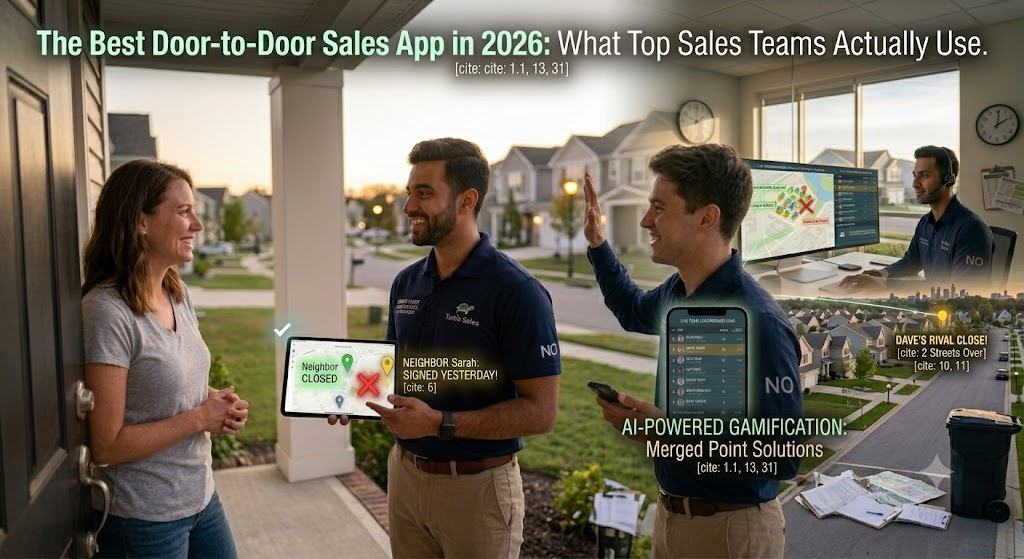
- The Upgrade: Consolidated platforms use dynamic maps that update for the whole team in real-time. If a house is universally hostile or a strict "No Soliciting" zone, a massive red identifier appears on every team member's screen instantly. Reps gain the peace of mind to simply walk past the bad doors and focus their energy exclusively on viable targets.
4. Integrated Gamification (The Micro-Dopamine Hit)
Telling a hungry, young rep to "wait for the commission check in 30 days" is a guaranteed way to lose them. They grew up in an era of instant digital feedback. Your software needs to replicate that feeling.
- Visible Winning: The best platforms don't hide the leaderboard in a sub-menu or a separate Slack channel. They overlay it directly on the live neighborhood map. When a rep gets a harsh rejection but instantly sees a notification popup that their teammate just closed a deal two blocks away, it proves the territory is hot. It turns an isolated, lonely grind into a multiplayer game.
Stop Making Your Reps Do Administrative Gymnastics
If you want your reps to act like professional Neighborhood Consultants, you have to give them a single, frictionless tool that treats them like professionals.
The future of D2D sales belongs to the teams who stop stitching together Frankenstein apps and start unifying their routing, intelligence, and motivation into one seamless screen. When you make the software invisible, the sales take care of themselves.